


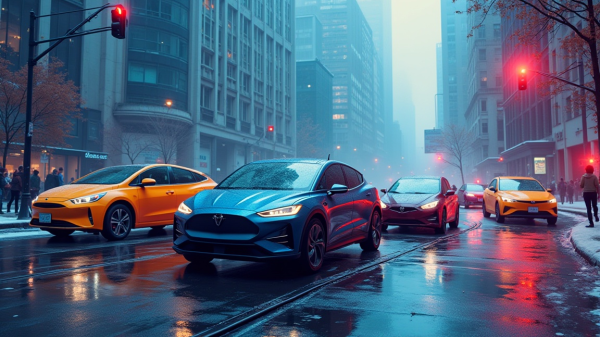


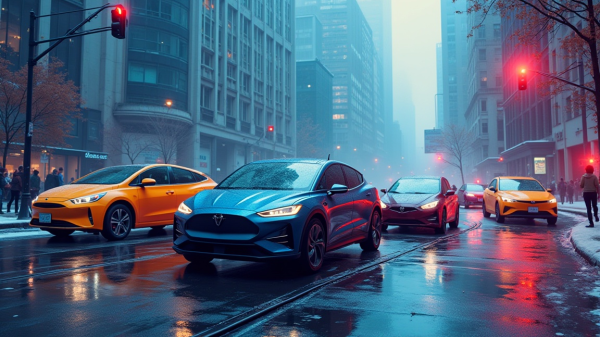

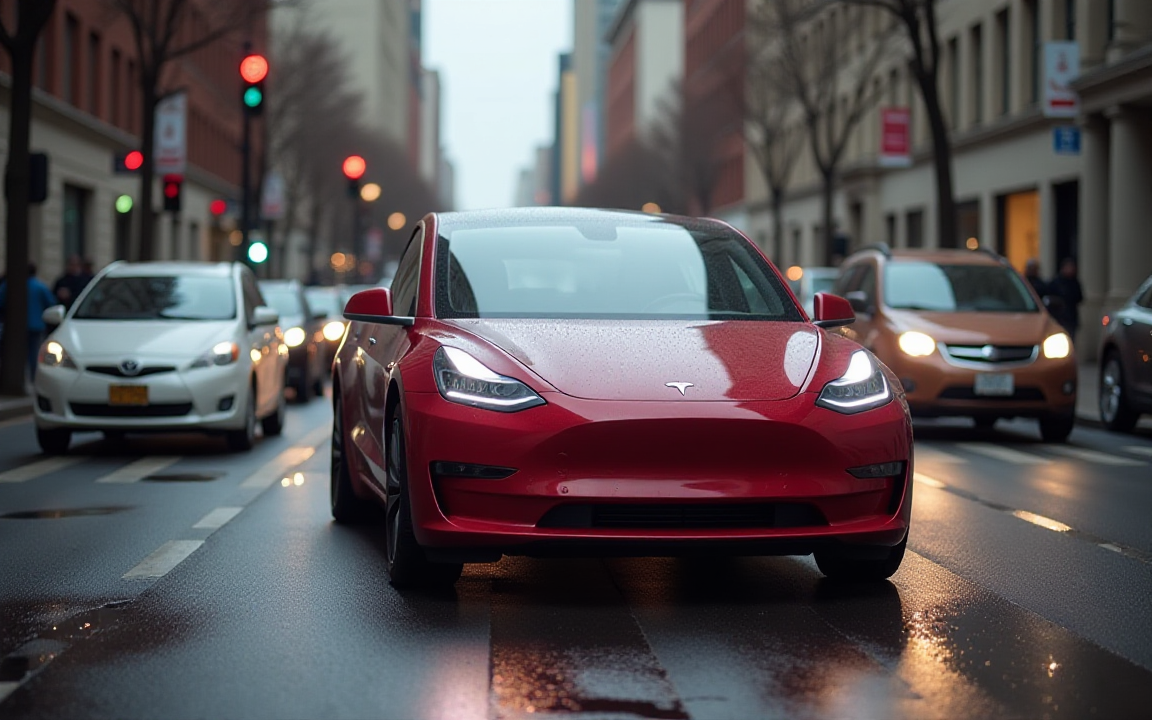
Tesla (NASDAQ: TSLA) has rolled out its latest Full Self-Driving (FSD) version FSD v14.2.2.2 – touting smoother lane changes and improved decision-making.
Yet despite billionaire Elon Musk’s bold promises, the system remains classified as Level 2 driver-assist technology, meaning human supervision is still required.
Meanwhile, Alphabet’s self-driving unit “Waymo” has already launched a driverless fleet in several US cities – raising questions about whether TSLA can truly claim leadership in autonomy.
For now, there are ample reasons (discussed below) to believe Tesla is significantly behind Waymo in robotaxi services.
Scale of deployment
Waymo already runs hundreds of driverless vehicles across Phoenix, San Francisco, Los Angeles, and Austin.
Tesla’s robotaxi fleet in Austin launched with about 30 cars only. The disparity in scale highlights how far Tesla must go before it can match Waymo’s operational footprint.
Driverless capability
Waymo already offers rides with no human driver at all, while Tesla’s FSD still requires constant supervision.
TSLA’s system is marketed as “autonomous,” but regulators classify it as driver-assist. This further suggests Waymo is more advanced in autonomous driving than the Elon Musk company.
Regulatory approval
Waymo has secured permits to operate commercial driverless services in over 20 markets already.
In comparison, Tesla has regulatory approval for robotaxi services in only two states. Even in those markets, it faces investigations into safety incidents involving its FSD system.
Without regulatory trust, TSLA can’t expand its robotaxi services widely – limiting its ability to compete head-to-head with Waymo.
Technology approach
Waymo relies on lidar, radar, and high-definition mapping to ensure redundancy and safety. Tesla has chosen a vision-only approach – betting cameras and neural networks can replicate human perception.
Critics argue this leaves a TSLA robotaxi less reliable in complex urban environments compared to Waymo’s multi-sensor system.
Operational experience
Waymo has logged millions of driverless rides since 2017, building customer trust and gathering vast amounts of data.
Tesla Inc. is only beginning to test robotaxis with consumers, meaning its real-world experience is far behind. This operational gap is critical in proving safety and scalability.
Reliability gap
Former Tesla board member Steve Westley has pointed to a stark reliability difference: Waymo vehicles average about 17,000 miles between critical interventions, while Tesla manages around 1,500 miles only.
This highlights why Tesla’s system still demands frequent human oversight, undermining its claim to autonomy.
Conclusion: Tesla has scale but lags in readiness
Wedbush’s senior analyst Dan Ives believes Tesla is better positioned than Waymo is in robotaxis due to its sheer scale, with millions of cars already equipped for software updates.
But scale alone is not enough. Tesla must first fix reliability, regulatory, and technological hurdles before its massive fleet can truly deliver on Musk’s vision.
Until then, Waymo remains ahead in the race for autonomy.
The post Is Tesla really the leader in autonomous driving? appeared first on Invezz